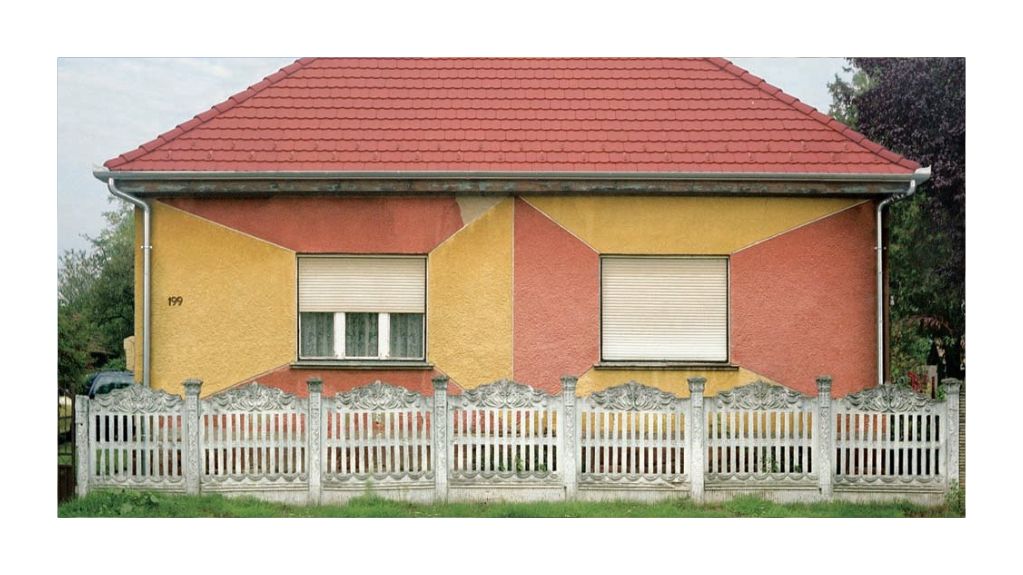
Kádár cubes are a defining feature of the Hungarian landscape. There are approximately 800,000 of these square houses with tent-like roofs spread across the country, usually in small villages and built between 1960 and 1980. Yet, for a long time, the small structures have reminded Hungarians of the painful Soviet era, a time which the country has only just started to confront. Most of the buildings are in bad shape, with their older inhabitants (often the same people who built the houses in the first place) unable to renovate them. Many have been left empty and are crumbling.
But while Kádár cubes were long out of fashion, the tiny houses are being revitalised by young people. Increasingly, images of colourful Kádár cubes are appearing on the internet, on the websites of art magazines, and trendy social media pages.
Known in Hungarian as Kádár-kocka, the houses were named after the General Secretary of the Hungarian Socialist Workers’ Party at the time of their construction: the pro-Soviet János Kádár, who replaced the stricter Mátyás Rákosi after Hungary’s 1956 uprising and stayed in power until 1988. It was under Kádár that Hungary entered a new era of relative liberty (at least compared to neighbouring East Germany or Romania), cultural freedom, and comparatively high standards of living, earning the country its reputation as the “happiest barrack” of the Soviet Block. These three decades were dubbed Goulash Communism (after Hungary’s national, traditional, meaty soup) for providing citizens with a degree of wealth and food aplenty. The country was changing, and part of that development was the building of new houses: tower blocks in cities, and Kádár cubes in rural areas.
Read the whole article on The Calvert Journal