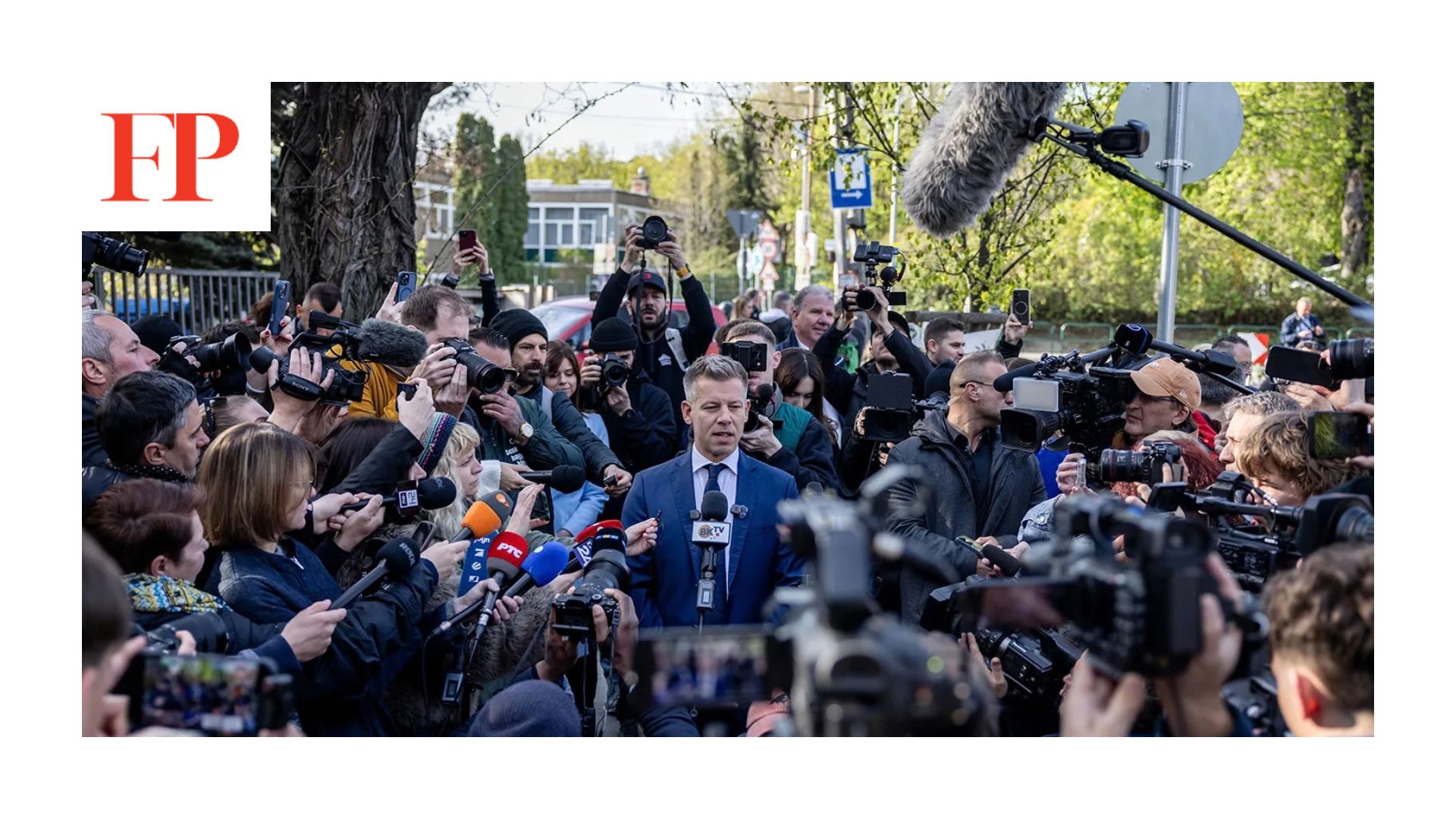
Peter Magyar is on a mission to restore Hungarians’ faith in public media.
In February, Hungary’s flagship public broadcaster, M1, debuted a new daily program called Horrors of War.
“Forced conscription, families torn apart, poverty, and countless victims,” the presenter said at the start of the first broadcast, standing amid computer-generated rubble while artificial explosions lit up the studio. The program then cut to images of bombed apartment blocks, grieving civilians, and shattered streets in Ukraine. “Last year alone, 2,500 civilians were killed,” the 17-minute episode concluded.
Debuting nearly four years into Russia’s full-scale invasion, but just two months before Hungary’s general election in April, Horrors of War was not intended to inform viewers. Rather, it was designed to persuade them to vote for Viktor Orban, Hungary’s then-prime minister, whose central campaign promise was to keep Hungary out of the war in neighboring Ukraine as he maintained close ties with Moscow.
Under Orban, public radio and television channels became tools of his right-wing Fidesz party. The government’s control over the media, including the centralized public broadcaster, helped Orban sustain his 16-yearlong illiberal rule. Yet, on April 12, Peter Magyar, a political novice, unseated Orban, with his Tisza party obtaining a historic majority of the vote and two-thirds of parliamentary seats.
Now, Magyar’s center-right government faces the challenge of decentralizing public media and reestablishing viewers’ trust. If it succeeds, Hungary could provide a model for other places seeking to dismantle propaganda networks and restore faith in an independent but state-funded press as a public good.
Read on Foreign Policy.