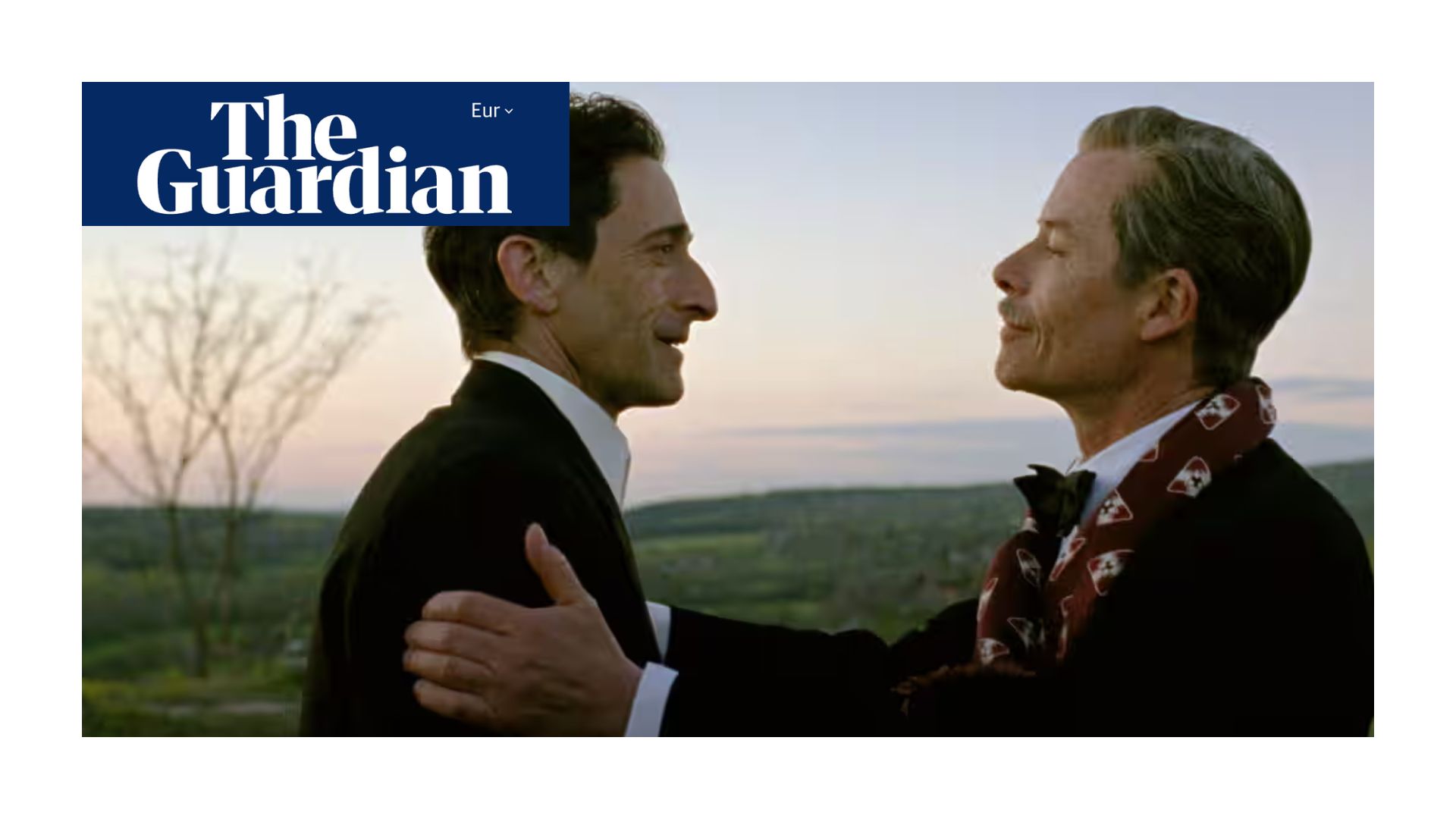
While country draws international talent, domestic movies are more likely to get made if they align with Orbán politics.
The office of Proton Cinema lies on the ground floor of a modernist house in Budapest’s 13th district, where during the second world war Nazi troops forced Jewish people into a ghetto. The independent production company was a great match for The Brutalist, Brady Corbet’s Holocaust drama, which won four Baftas and will be a strong contender at the Oscars on Monday with 10 nominations.
“We couldn’t imagine The Brutalist being shot elsewhere,” said Viktória Petrányi, the Hungarian co-producer of the three-and-a-half-hour hit and Proton’s co-founder.
Proton Cinema is behind multiple international movies such as Midsommar, a 2019 award-winning horror featuring Florence Pugh, and its co-founder Kornél Mundruczó’s Pieces of a Woman.
But unlike in many countries where film companies producing such blockbusters would expect generous state funding or fiscal incentives for at least a portion of their financial backing, the company’s domestic films are “mainly self-financed”, Petrányi said.
Hungary’s National Film Institute (NFI), a government-controlled body, overwhelmingly sponsors movies that align with the rightwing ideology of Viktor Orbán’s ruling Fidesz party. Dávid Jancsó, the Oscar-nominated editor of The Brutalist, said: “Governments can decide whether to spend taxpayers’ money on propaganda films or on films that will win awards. In Hungary, the decision was for propaganda movies.”
Read the piece on The Guardian.